


For further information contact the LCIPP team via lcipp@unfccc.int
Objective
To facilitate intergenerational knowledge exchange and incorporation of diverse knowledge systems and values into climate policies and actions for the well-being of present and future generations.
Outputs
Inputs will be captured in an informal summary report and, as appropriate, in any submission by the Facilitative Working Group to the second global stocktake.
Through decision 14/CP.29, COP 29 welcomed the report of the Facilitative Working Group, including the workplan of the Local Communities and Indigenous Peoples Platform (LCIPP) for 2025–2027. At the fifth plenary meeting of COP 29, on a proposal by the President, the COP agreed to call it the “Baku Workplan of the Local Communities and Indigenous Peoples Platform.”
Under Collective Approach 3 (CA3) - Seventh-Generation Round Table, the Baku Workplan provides for three interconnected activities:
- Activity 3.1 Annual Seventh-Generation Round Table based on and guided by the seventh-generation principle to promote intergenerational dialogue and to highlight the role of Indigenous youth and youth from local communities in the collective well-being of future generations;
- Activity 3.2 A virtual meeting for Indigenous youth and youth from local communities to ensure the agenda and discussions for the Seventh-Generation Round Table represent each of the United Nations Indigenous sociocultural regions and to build the capacity of youth to effectively engage during the sessions of the COP.
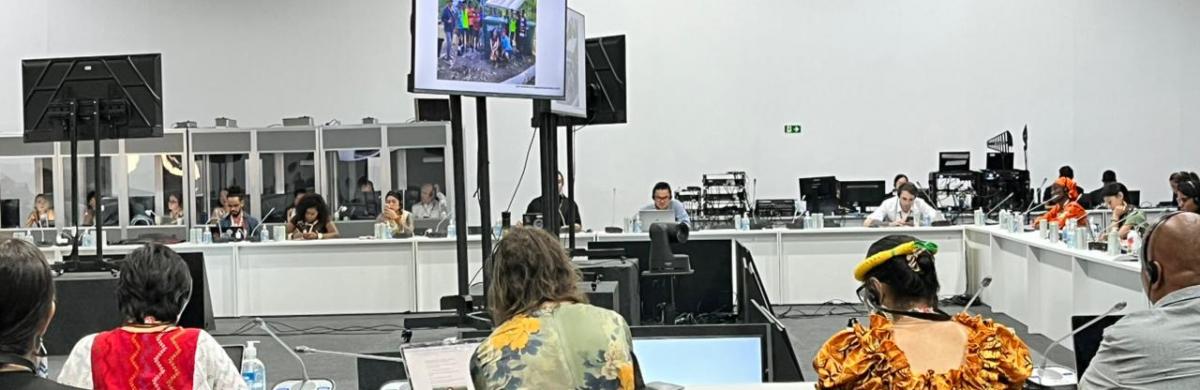
- Activity 3.3 An annual dialogue for Indigenous Peoples, local communities, Parties, constituted bodies and other LCIPP contributors focusing on intergenerational knowledge exchange to integrate diverse knowledge systems and values into climate policies and actions while ensuring the well-being of present and future generations.
Together, these activities aim to uplift the voices of Indigenous youth and youth from local communities in the UNFCCC process, thus supporting intergenerational and global commitments to address climate change and restore the integrity of nature.
These CA3 activities will be implemented as a coherent and mutually reinforcing process.
The Annual Intergenerational Dialogue with Parties, constituted bodies and other relevant entities (activity 3.3) will be informed by the outcomes of the Annual Seventh-Generation Round Table (activity 3.1). This ensures a sustained pathway for the diverse knowledge and practices shared during this process to feed into relevant work across the UNFCCC, and contribute to climate policies and actions that are responsive to the well-being of current and future generations.
Opening
• FWG Representative
• Sally Higgins, the COP31 Presidency Youth Climate Champion (TBC)
Presentation of the outcomes of the Annual Seventh-Generation Round Table by Indigenous youth and youth from local communities
Initial reflections: Perspectives from Parties and Constituted Bodies
Intergenerational Dialogue
Bridging lived realities, diverse knowledge systems, responsibilities and climate action
Looking ahead
Opportunities for collaboration and action
Closing reflections and next steps